
Spectra Sonics History: How their 610 Complimiter and FET Circuits Changed Pro Audio Forever
Introduction — Before “Vintage” Became a Gimmick
Before “vintage” meant overpriced clones and plugin presets, it meant something very different: engineering breakthroughs under real constraints.
In the late 1960s, the pro audio world was in transition. Tubes were fading. Solid-state was emerging. Most manufacturers were focused on recreating warmth or chasing musical coloration.
Spectra Sonics took a completely different path.
They weren’t trying to make audio sound better.
They were trying to make it stop failing.
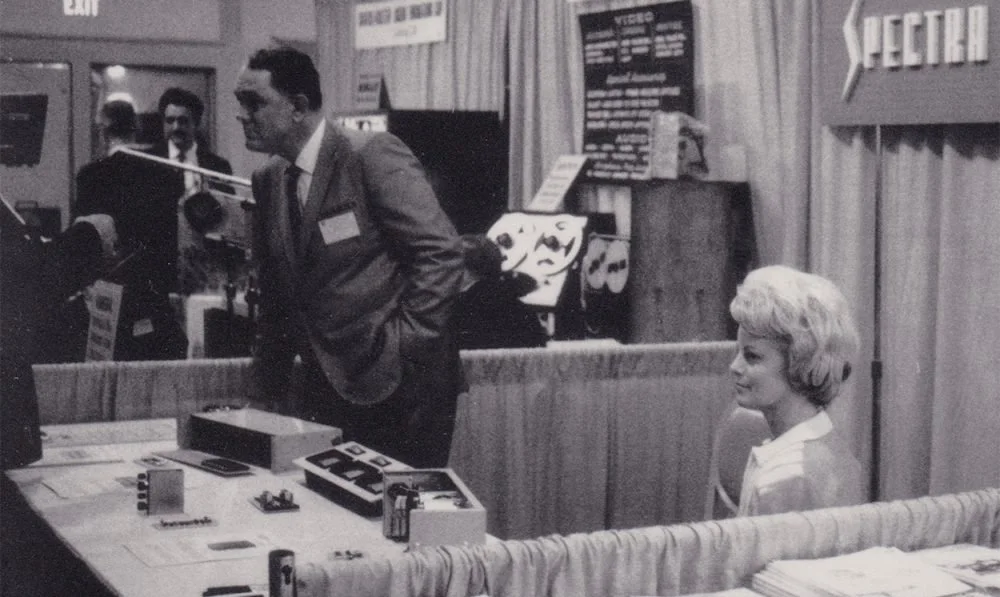
At the center of that philosophy was William G. Dilley—a combat pilot and aerospace engineer whose background had nothing to do with “tone” and everything to do with precision, reliability, and control under extreme conditions.
And that mindset produced some of the fastest, cleanest, and most forward-thinking analog circuits ever built.
From Missile Systems to Mix Consoles
Before founding Spectra Sonics in 1964, Dilley worked in military and aerospace electronics, contributing to high-reliability systems tied to U.S. defense infrastructure—including missile guidance and control environments.
That matters.
Because when you design circuits for something like a Minuteman missile system, failure is not an option. You don’t design for vibe. You design for:
Absolute signal integrity
Instantaneous response
Zero tolerance for overload
Predictable behavior under stress
Dilley brought that exact philosophy into audio.
Where most designers saw music as an artistic signal, he saw it as a dynamic system prone to instability.
His goal wasn’t to shape sound.
It was to eliminate error at the source.
The FET Revolution — Speed Over Color
In the 1960s, most dynamics processors were slow by modern standards:
Optical compressors reacted lazily
Vari-mu designs introduced harmonic coloration
Transients regularly slipped through uncontrolled
Spectra Sonics changed that by embracing field-effect transistor (FET) technology early—and pushing it further than anyone else.
But here’s the key distinction:
Other companies used FETs to create a sound.
Spectra Sonics used them to create speed.
And in Dilley’s world, speed wasn’t a feature—it was the entire point.
Because if a circuit can react fast enough, it doesn’t have to “fix” problems after the fact.
It can prevent them entirely.
The 601 Module — Eliminating Problems Before They Exist
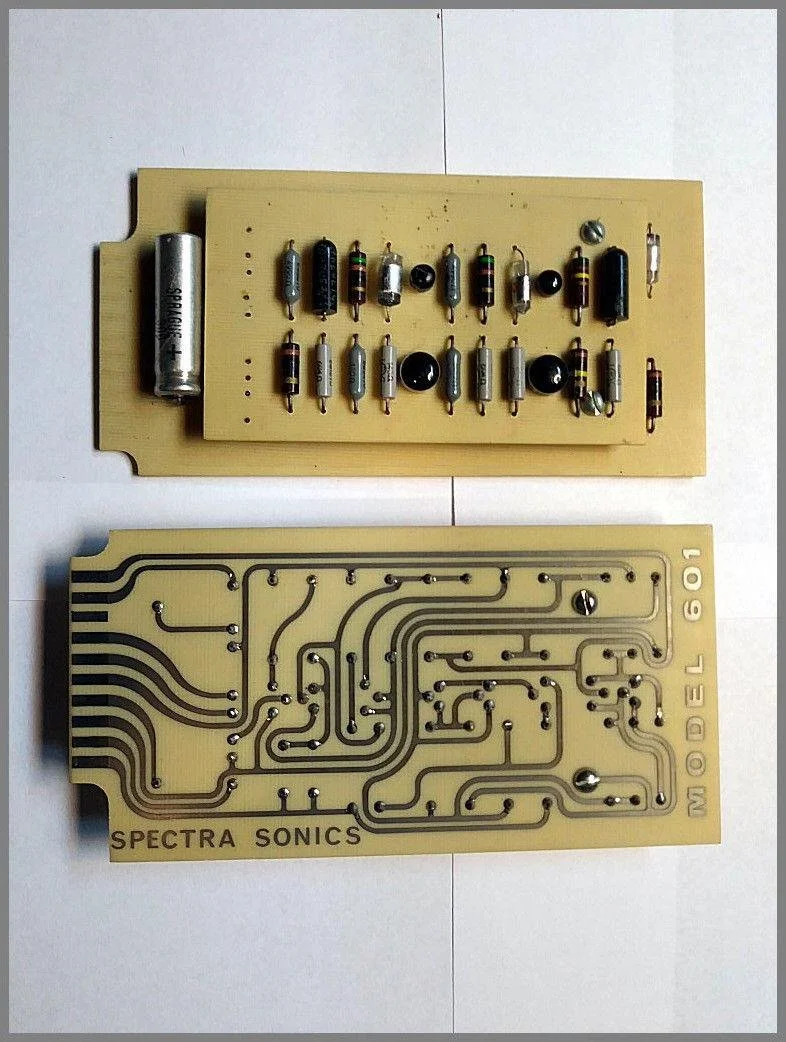
The backbone of Spectra Sonics’ dynamics architecture was the Model 601.
On paper, it’s a compressor/limiter module.
In practice, it behaves more like a real-time error correction system.
What made it different?
Peak response times in the sub-microsecond range
Ability to catch transient spikes before they propagate through the signal chain
Minimal audible artifacts, even under heavy control
This wasn’t compression in the traditional sense.
It was preemptive transient suppression.
Instead of reacting to peaks, the 601 effectively removes them from existence—long before they can clip a tape machine, distort a bus, or trigger downstream nonlinearities.
That’s a radically different concept than what most engineers are used to.
The 610 Complimiter — A Category of Its Own

The 610 Complimiter — A Category of Its Own
In 1969, Spectra Sonics released what is still one of the most misunderstood dynamics processors ever built:
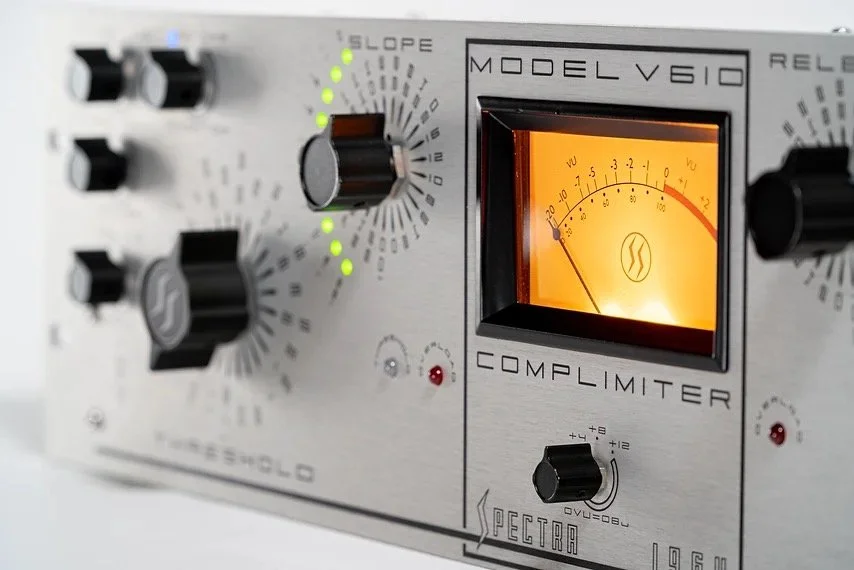
The Model 610 Complimiter
Not a compressor.
Not just a limiter.
Both—operating independently or simultaneously.
At a time when most units forced you to choose between control and transparency, the 610 gave you both.
What Made the 610 Different
Dual-stage design:
Program compression (musical control)
Ultra-fast peak limiting (invisible protection)
Attack speeds around 100 nanoseconds
Peak limiting approaching instantaneous response
Ratios up to 100:1 without audible pumping
Let that sink in.
Even today, most analog compressors—and plenty of digital ones—can’t touch that level of speed without introducing artifacts.
Why It Matters
Traditional compressors:
React to peaks
Introduce distortion
Require compensation (de-essing, automation, limiting)
The 610:
Prevents peaks from ever becoming a problem
Maintains full bandwidth
Preserves the integrity of the source
This is where the term often associated with Spectra Sonics comes into play:
“Peak-free audio.”
Not controlled.
Not softened.
Removed.

Spectra Sonics Consoles
Systems, Not Gear
Spectra Sonics didn’t just build standalone equipment. They built modular ecosystems.
Studios could assemble entire consoles using:
101 mic preamps
110 amplifier modules
601 dynamics modules
This approach allowed for:
Custom configurations
Scalable systems
Consistent performance across signal paths
And the industry took notice.
Spectra Sonics systems were installed in legendary facilities, including:
Record Plant
Stax Records
Muscle Shoals Sound Studio
Atlantic Records
These weren’t boutique studios chasing flavor.
They were high-pressure production environments where reliability and clarity mattered more than anything else.
The Design Philosophy — Eliminate, Don’t Enhance
Spectra Sonics operated on a philosophy that feels almost rebellious today:
Don’t add character
Don’t introduce distortion
Don’t “warm up” the signal
Don’t fix problems after they happen
Instead:
Maximize headroom
Preserve harmonic integrity
Eliminate overload artifacts
Maintain absolute control
This is the opposite of modern gear culture.
Today’s market is obsessed with:
Saturation
Color
Emulation
“Vibe”
Spectra Sonics rejected all of it.
Not because it sounds bad—but because it’s often compensating for problems that shouldn’t exist in the first place.
Why Spectra Sonics Still Matters in Modern Production
Why Spectra Sonics Still Matters in Modern Production
Fast forward to today:
Higher sample rates
More transient-heavy material (EDM, hip-hop, hybrid scoring)
Louder mixes
Tighter headroom in digital systems
And yet, we’re still dealing with:
Inter-sample peaks
Converter clipping
Harsh transient distortion
Over-reliance on limiters and plugins
Sound familiar?
Spectra Sonics solved many of these issues in the 1960s.
Not with DSP.
Not with lookahead limiters.
But with pure analog speed and control.
That’s why these designs still hold up—and in some cases, outperform modern alternatives.
The Quiet Legacy
Spectra Sonics doesn’t get the same mainstream recognition as:
UREI
Teletronix
Neve
API
But from a purely engineering standpoint, they were ahead of all of them in one critical area:
Transient control.
Their designs weren’t about creating a signature sound.
They were about preserving the truth of the signal under any condition.
And that makes them less flashy—but arguably more important.
Conclusion — The Esoteric Truth of Control
Spectra Sonics represents a different lineage in pro audio.
Not art-first.
Not marketing-first.
Physics-first.
While the rest of the industry was chasing tone, Spectra Sonics was solving problems at the level of signal behavior itself.
And here’s the uncomfortable truth:
Most of those problems still exist today.
We just hide them behind plugins.